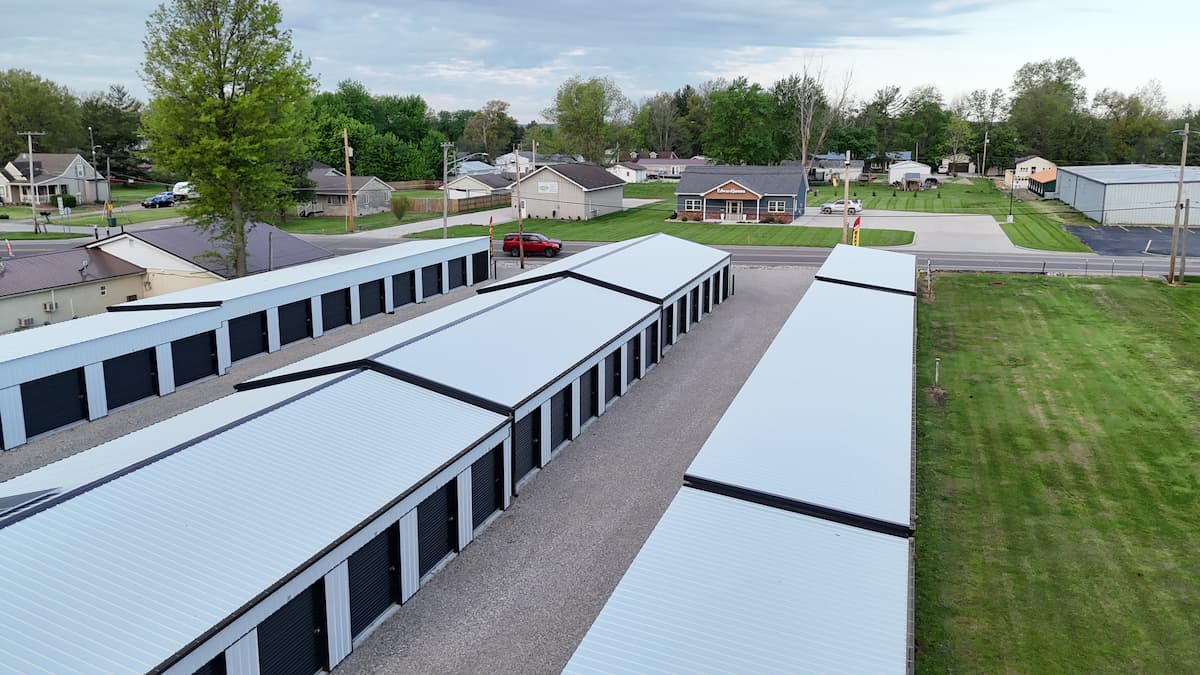
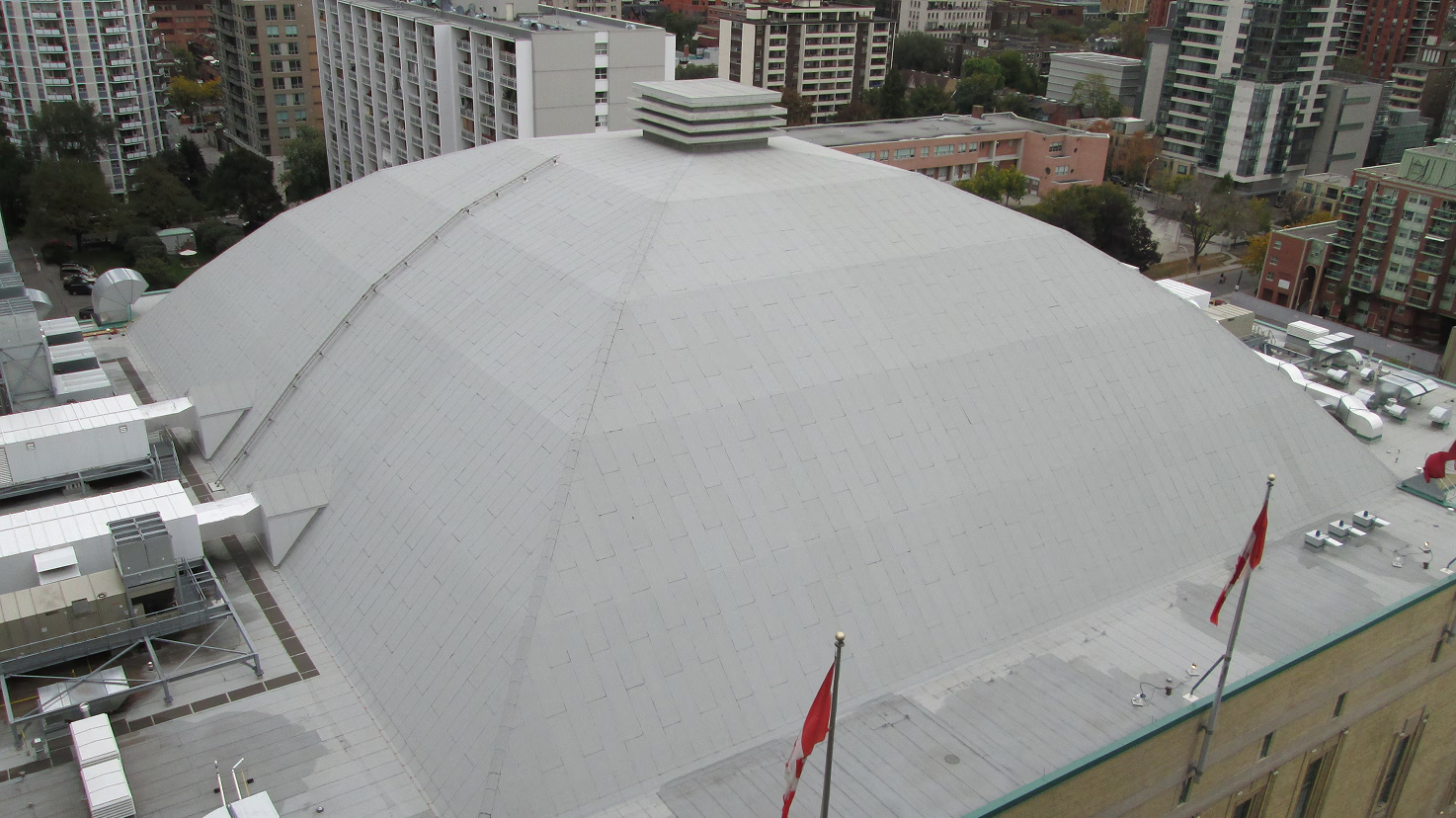
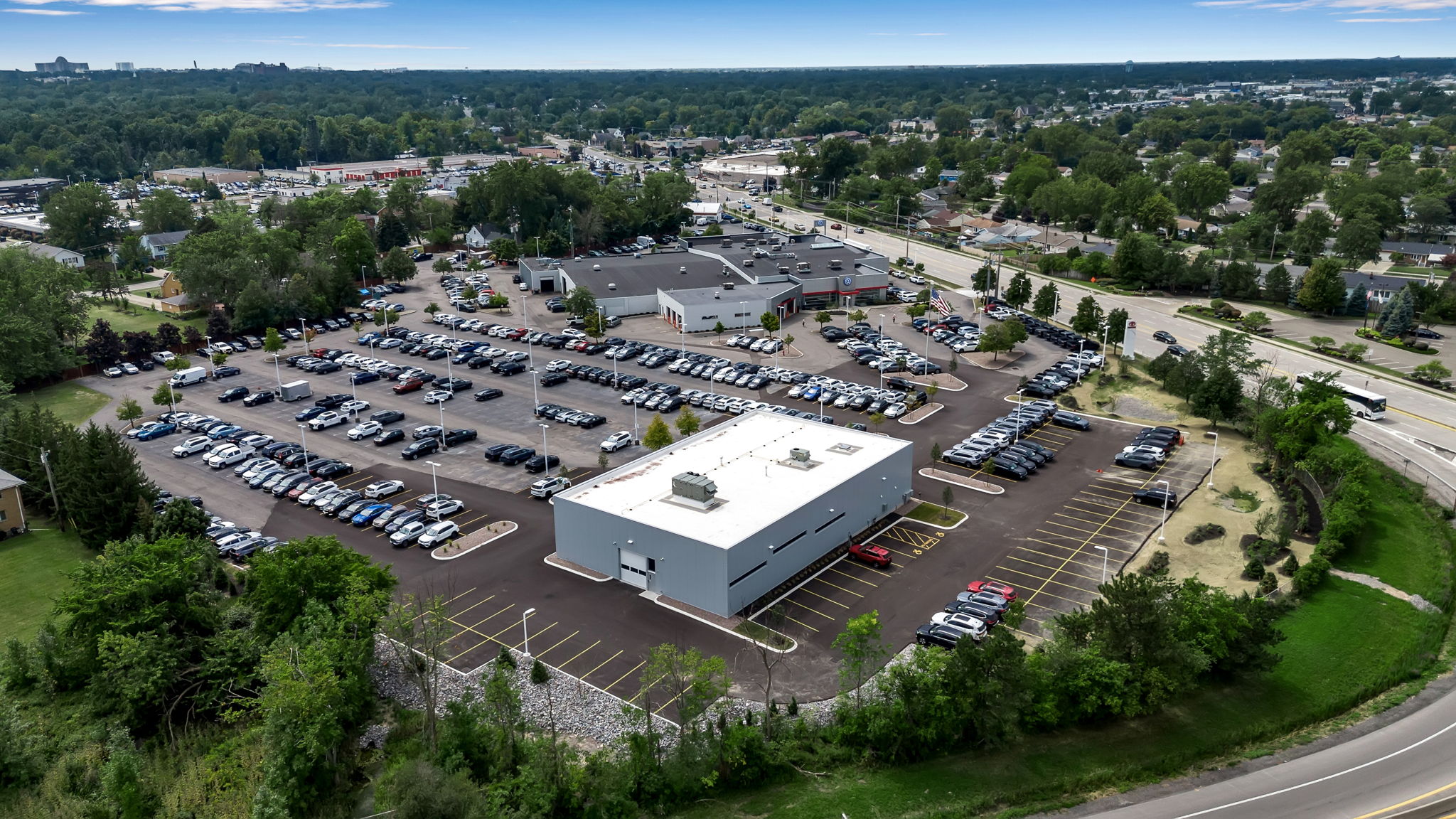
The fulfillment centers strung along Airport Way, the food-processing plants on the Swan Island peninsula, and the wide retail rooftops out by Cascade Station all share a problem: they are simply too large to inspect well on foot. A technician walking a 90,000-square-foot membrane burns most of a day, leaves a trail of footprints across the field, and still walks past the ponding low spots that read as nothing from standing height. We fly those roofs instead. A drone carrying a 4K visual camera and a radiometric thermal sensor sweeps the whole surface at a fixed altitude in a fraction of the time, and it does it without sending a person onto a roof whose true condition nobody has confirmed yet.
That last point carries more weight than it first appears. Sending a crew onto an unknown low-slope roof is a fall-exposure and liability question, and foot traffic itself bruises aging membranes and punches through saturated insulation. Flying first lets us decide where, and whether, anyone needs to physically climb up at all. By the time a roofer steps onto the membrane, we already know which specific areas earn a hands-on look and which the camera has already cleared.
The most valuable thing an infrared pass produces is a moisture map of the insulation assembly, and on a big Portland low-slope roof that map is the whole game. Wet insulation stores and releases heat differently than dry insulation. After a sunny day, as the roof radiates heat into the cool evening, saturated zones stay warm longer and glow against the cooler dry field in the thermal image. The membrane surface above them can look flawless while the insulation beneath is soaked, the fasteners are corroding, and the steel or wood deck is quietly rotting. A purely visual look, from the air or the ground, will never catch that. The thermal scan does, and it is the only practical way to scan an entire large roof for trapped moisture at once.
This finding drives the single most consequential roofing decision an owner faces: targeted repair and recover versus a full tear-off. If the moisture is confined to a handful of discrete areas around failed penetrations or open seams, we cut out the wet insulation, dry the deck, and patch the field. If the thermal map shows water tracking across half the roof, recovering over saturated insulation only seals the problem in, and a tear-off becomes the honest call. We would rather hand an owner the infrared evidence than ask them to accept a verbal opinion on a six-figure decision. Our long wet season means trapped moisture rarely dries on its own, so catching it early genuinely changes both the scope and the price.
Operating a drone over a commercial property is regulated work, and we run it accordingly. Flights follow FAA Part 107 rules for commercial small unmanned aircraft, with a certificated remote pilot and a registered aircraft. A large share of Portland's industrial and logistics roof stock sits inside controlled airspace beneath Portland International, the Hillsboro Airport, and Troutdale, which means flights in those zones require airspace authorization before the drone ever leaves the ground. We secure that clearance as part of scheduling rather than discovering the restriction on inspection morning and stalling the job.
On site, the safety discipline continues. We keep the aircraft within visual line of sight, brief the property's staff before launch, and avoid flying directly over people on an active campus, which matters on occupied office parks and school grounds. The drone never substitutes for a roofer's judgment about what the images mean. What it removes is the most dangerous part of the inspection, which is a person navigating a wet, cluttered, possibly compromised roof to gather information a sensor can collect cleanly from the air.
When a windstorm pours down out of the Columbia River Gorge or a rare hail cell rolls across the metro, the insurance claim lives or dies on documentation. An aerial inspection produces GPS-tagged imagery an adjuster can review remotely: hail-impact density across the field, membrane lifted or peeled by uplift, damaged rooftop equipment, and the condition of every flashing and edge-metal run. We assemble it into a report formatted the way major commercial carriers expect, so the package goes straight to the adjuster instead of bouncing back for more proof. After a significant storm, we can usually turn a claim documentation set around within twenty-four to forty-eight hours of the flight.
The same imagery pulls double duty on the capital-planning side. A facilities manager budgeting across a roof file of buildings gets a dated, geolocated condition record for each roof, which makes it far easier to defend a replacement request or sequence repairs across several budget years. Each flight becomes the baseline that next year's flight is measured against, so a slow-developing problem shows up as a trend rather than a surprise emergency.